

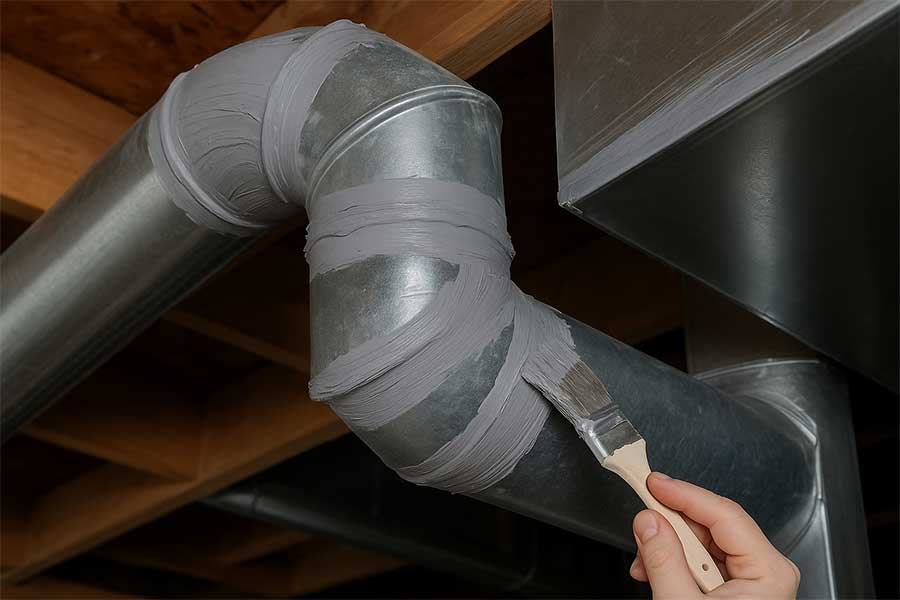
Sealing your air ducts lowers cooling bills because air that escapes through leaks never reaches your rooms, which forces your air conditioner to run longer to hit the same thermostat setting. In Stone Oak, TX, where much of the duct run sits in a hot attic above a two-story home, that lost air is expensive air. Sealing the joints, seams, and connections keeps conditioned air inside the system, evens out temperatures between floors, and reduces the dust and attic air that gets pulled into your living space. Thayer Air Conditioning inspects, seals, and repairs ductwork for Stone Oak homes so your equipment cools the house instead of the attic.
How to Tell If Your Home Needs Air Duct Sealing?
The clearest sign is a house that cannot hold an even temperature, no matter how you set the thermostat. Rooms at the far end of a duct run, especially upstairs bedrooms, feel warmer than the rest of the house while the system runs and runs.
Rising energy bills with no change in how you live are another indicator worth taking seriously. If your usage habits are the same and your cooling costs keep climbing across the season, something in the system is losing efficiency, and ductwork is a common culprit.
There are things you can observe without opening anything up. Dust that reappears around supply vents days after you clean it, a whistling or rushing sound near a register, a return grille that seems to pull hard while other rooms get weak airflow, and cycles that run noticeably longer than they used to are all worth reporting.
Duct leaks matter because every cubic foot of cooled air that escapes into an attic or wall cavity is air you paid to cool and never got to use. That is the whole reason sealing pays off. Our technicians pressure test and inspect the system, then handle professional ductwork installation and sealing where the actual losses are, so you are fixing the real problem rather than guessing at it.
Understanding How Air Duct Leaks Increase Your Cooling Costs
Duct leaks raise your bill in more than one way at once, which is why the effect adds up faster than homeowners expect. Here is what leaking ducts do to a Stone Oak home:
- Increased energy use: Your system has to make up for the air it lost, so it runs longer cycles to reach the same temperature.
- Uneven cooling: Rooms served by leaky runs stay warm, and you end up dropping the thermostat for the whole house to fix one room.
- Added equipment wear: Longer run times mean more hours on the compressor, blower motor, and contactors, which shows up eventually as repairs.
- Dust and outdoor air pulled inside: Leaks on the return side draw attic air, insulation fibers, and dust straight into the airstream and then into your rooms.
- Humidity that will not come down: Air pulled from an unconditioned attic brings moisture with it, so the house feels sticky even when the temperature reads fine.
The blower and air handler carry the extra load in all of this. When a system fights leaks for years, that equipment is usually the first place strain shows up, which is why air handler repair service and duct sealing so often get discussed in the same visit.
How Air Duct Sealing Improves Energy Efficiency
Sealing works by keeping conditioned air inside the ducts until it reaches a room where you want it. Once the leaks are closed, more of what your air conditioner produces actually arrives where it is supposed to, so the system satisfies the thermostat faster and shuts off sooner.
Shorter run times translate directly into lower energy use. Nothing about the equipment changed, but it stops working around a problem, and that difference is what you feel in both comfort and cost over a long Central Texas cooling season.
Sealing also evens out delivery between rooms and between floors. In Stone Oak’s two-story homes on hilltop lots, the upstairs is usually the first place the improvement shows, because those runs are the longest and the most exposed to attic heat.
There is an air quality benefit as well. Closing return-side leaks keeps attic dust, insulation particles, and humid outside air out of the airstream, which means your filter is catching household dust rather than trying to filter your attic. Following the sealing work with an annual AC tune-up lets us confirm airflow, static pressure, and temperature split are where they should be now that the ducts are tight.
Why You Should Choose Professional Air Duct Sealing Services
Duct sealing is worth doing right the first time, because most of the leakage in a typical system is in places a homeowner cannot safely reach or reliably find. Here is what a professional job brings:
- Diagnosis before repair: Trained technicians locate and measure leakage instead of sealing whatever is visible and hoping it was enough.
- The right materials: Mastic, foil-backed tape rated for duct use, and proper mechanical fastening hold up in attic heat. Standard hardware store duct tape does not.
- Access without damage: Attic duct runs in Stone Oak homes sit above insulation and around framing, and getting to them safely takes the right equipment and experience.
- Whole-system thinking: Sealing changes system pressures, so airflow, register balance, and equipment performance all get checked afterward rather than left to chance.
- Cleaner results you can verify: You should be able to feel the difference in the rooms that were weakest, and we would rather show you that than describe it.
Sealing sometimes also uncovers issues that have been hiding behind the leaks, such as a crushed flex run, a disconnected boot, or a component that has been struggling under the extra load. When that happens, our professional AC repair work addresses it while we are already in the system rather than leaving you with a second appointment.
Tips for Maintaining Your Sealed Air Ducts for Long-Term Savings
Sealed ducts stay sealed with very little effort, as long as you watch for the few things that change over time. Keep an eye on these:
- Visual checks a couple of times a year: Look for disconnected or sagging flex duct where it is visible, and note any spot where insulation looks disturbed or compressed.
- Filter changes every 1 to 3 months: A restricted filter raises pressure inside the system, and pressure is exactly what works against sealed joints and connections.
- Attention to how the house feels: If a room that improved after sealing starts falling behind again, that is useful information and worth a call.
- Care during other attic work: Roofers, insulation crews, and cable installers move through the same space your ducts occupy. A quick look afterward catches accidental damage early.
- Annual professional service: A technician measures airflow and static pressure, checks the equipment, and verifies the duct system is still performing the way it did the day it was sealed.
Frequently Asked Questions
How do I know if duct sealing is worth it for my Stone Oak home?
If your upstairs runs consistently warmer than downstairs, your bills have crept up without a change in habits, or dust keeps returning around your vents, duct sealing is very likely worth an inspection. Stone Oak’s two-story homes off Stone Oak Parkway and TPC Parkway typically run long duct paths through hot attics, which is exactly where leakage costs the most. We test the system first and tell you what we actually find.
Can I seal my air ducts myself?
You can seal the small amount of accessible duct near a register or in a garage, but the leaks that drive up bills are usually at plenum connections, boots, and joints buried in attic insulation. Sealing the wrong material with the wrong product also tends to fail within a season or two in attic heat. Having it tested and sealed properly means you only pay for the work once.
How long does professional duct sealing take?
Most single-family homes are handled in one visit, with the time depending on how much duct is accessible and how many leaks turn up. We walk the attic and inspect the full run before starting, so you know the scope up front rather than partway through.
Will duct sealing help with humidity in my home?
Yes, in most cases. Return-side leaks pull humid attic air into the system, so your air conditioner ends up trying to dry out outdoor air instead of your living space. Closing those leaks means the moisture your system removes is moisture from inside your home, which is why houses often feel noticeably less sticky after sealing.
Getting More Out of Every Cooling Dollar in Stone Oak
Cooling a home through a long Texas summer is expensive enough without paying to condition your attic. Duct sealing is one of the few improvements that lowers energy use, evens out temperatures between floors, reduces household dust, and takes strain off equipment all at the same time, without replacing a single piece of your system.
Working with neighbors throughout Stone Oak, we see the same story repeatedly in homes on thin limestone hilltop lots across north Bexar County. The system is fine. The delivery is not. Fixing delivery is usually the cheaper and more satisfying answer.
If your home has rooms that never keep up or bills that keep climbing, schedule your appointment today and we will inspect your ductwork, show you what we find, and explain what sealing would change. Always Thayer For You.