

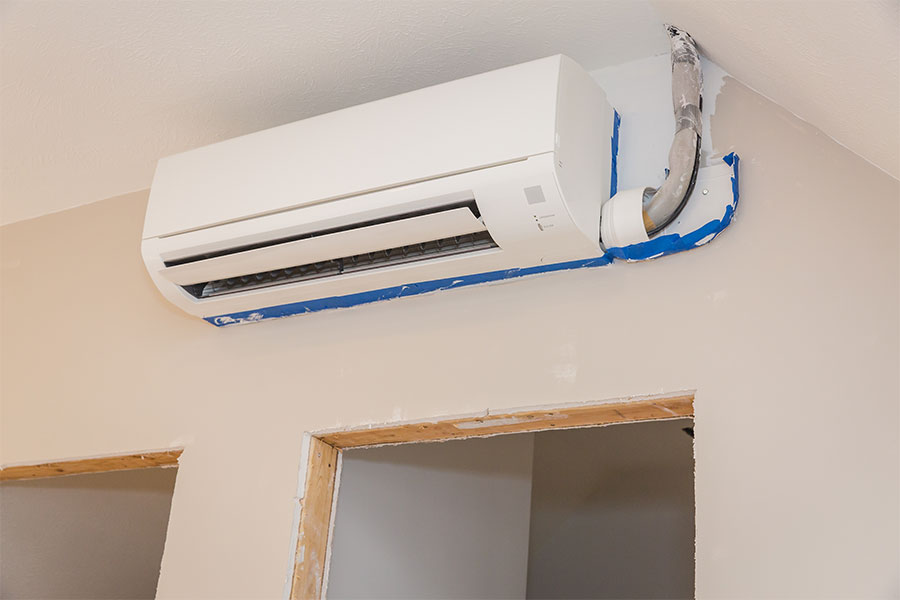
A ductless mini split is a good fit for a San Marcos, TX home when you need real heating and cooling in a space your existing ductwork does not reach, or when you want independent temperature control room by room. These systems pair a wall or ceiling-mounted indoor unit with an outdoor condenser, connected by a small line set instead of duct runs. They handle long Central Texas cooling seasons efficiently and still deliver heat during the short cold snaps that reach Hays County. Whether one is right for your house depends on your layout, your comfort complaints, and the condition of the system you already have.
Why Choose a Ductless Mini Split for Your Home?
The main reason San Marcos homeowners choose a ductless mini split is control. Each indoor unit runs on its own, so you can set one temperature in a converted garage and a different one in a back bedroom without touching the rest of the house. Families who argue over the thermostat usually notice the difference in the first week.
Efficiency is the second reason. A mini split moves conditioned air straight into the room it serves, so there is no duct run losing cooling on the way. Older homes near downtown San Marcos often have duct systems that were patched together over decades, and a ductless unit sidesteps that problem entirely.
The equipment is also compact. An indoor head takes up wall space instead of closet or attic space, which matters in smaller homes and in the newer student area rentals around Texas State University, where square footage is tight.
Installation is usually quicker and far less invasive than adding ducts. Most jobs need one small penetration through an exterior wall rather than framing changes or ceiling work, so you get your rooms back sooner. We handle ductless mini split installation from the load calculation through startup, so the system is sized for your actual space instead of a rule of thumb.
When Does It Make Sense to Install a Ductless Mini Split?
Timing matters, and a few situations make a mini split the obvious choice. Based on what we see in San Marcos homes, these are the moments worth a serious look:
- Renovations: Adding a mini split while walls are already open keeps the project simple, because you gain comfort without extending ductwork into a finished space.
- New additions: A sunroom, a bonus room over the garage, or a new bedroom rarely gets enough air from the original system. A dedicated head conditions that space properly instead of starving the rest of the house.
- Aging equipment: If your current system is near the end of its service life, this is the natural point to compare options. Some homes are better served by replacing an aging AC system with new central equipment, and others do better with a ductless setup or a combination of both.
- Room-specific problem areas: Garages, attic conversions, home offices, and upstairs bedrooms often run several degrees off the rest of the house. A mini split fixes the room without overcooling everything else.
- Energy use you want to bring down: Zoning means you stop paying to condition rooms nobody is using, which shows up on your bill during the long stretch of San Marcos summer.
If two or more of those describe your home, a mini split deserves a spot on your short list.
Key Benefits of Ductless Mini Splits
The benefits come down to targeted comfort with less waste. You condition the rooms you actually use, at the temperatures you actually want, and you skip the losses that come with moving air through ducts.
Installation is faster and less disruptive than a ducted retrofit, so your household routine barely changes. That is a real advantage in an occupied home, and it is one of the more common reasons neighbors here pick ductless over a larger project.
Mini splits also run quietly. The noisy components live in the outdoor unit, so an indoor head produces little more than a soft fan sound. Bedrooms and home offices benefit most.
Filtration is another benefit worth understanding. Mini split heads use washable filters that catch dust and larger airborne particles, and because a mini split runs at lower speeds for longer periods, it pulls more humidity out of the air than a system that short cycles. Humidity control matters in a river town, and homes close to the San Marcos River often feel muggy indoors even when the thermostat reads fine. When the problem goes past what a filter can handle, our indoor air quality improvements address the source rather than masking it.
Finally, these systems are flexible. Single-zone and multi-zone configurations fit everything from a one-room fix to a whole home design, in older houses and new construction alike.
How Much Does a Ductless Mini Split Cost in San Marcos, TX?
Cost depends on the specifics of your home, so the honest answer is that a real number comes from an in-home evaluation rather than a range printed online. Two houses on the same street can price out differently based on zoning needs and where the equipment has to go.
Here are the factors that drive the total:
- Unit size and capacity: Larger capacity equipment costs more, and correct sizing is not optional. An oversized unit short-cycles and leaves humidity behind.
- Number of zones: Each additional indoor head adds equipment and labor, so a four-zone system prices well above a single zone.
- Installation complexity: Line set routing, electrical capacity, wall construction, and condensate drainage all affect the work involved. Existing infrastructure can lower the cost or raise it.
- Labor: Local rates and the hours the job actually takes both factor in.
- Efficiency rating: Higher efficiency models carry a higher price up front and use less energy over their service life.
The practical move is to get an in-home quote in writing, with the equipment, the zone count, and the scope spelled out. That way you are comparing real proposals for your house instead of guessing against a national average.
Are Ductless Mini Splits Worth It?
For the right application, yes. If you have a room your ducted system has never cooled properly, or a space with no ducts at all, a mini split solves a problem that a bigger central unit usually cannot.
The zoning is what makes the value hold up over time. Cooling three rooms instead of eight, through a cooling season that runs most of the year along the IH-35 corridor, adds up.
These systems also handle both sides of the calendar. Heat pump operation covers the mild winters here, so you get one piece of equipment doing two jobs.
Upkeep is straightforward and it is not optional. Filters need cleaning, coils need attention, and drain lines need to stay clear. Staying current on mini split service and repairs keeps efficiency where it should be, so small issues get corrected before they turn into a no-cooling call in August.
The honest limitation is that a mini split is not always the cheapest way to fix a comfort problem. If your ductwork is sound and your equipment is young, a repair or a tune-up may be the better answer. A technician who looks at your home can tell you which situation you are in.
Frequently Asked Questions
How many mini split zones does a San Marcos home need?
Zone count depends on how many separate spaces need independent control, not on square footage alone. A single problem room needs one head, while a whole home design typically needs one per major living area or bedroom group. A load calculation for your specific house settles the number, and it is worth doing before you buy anything.
Can a ductless mini split heat a home during a Central Texas cold snap?
Yes. Modern mini splits operate as heat pumps and handle the temperatures the San Marcos area sees during winter cold snaps. Because those cold stretches here are short but real, a properly sized system carries the heating load without a separate furnace in most homes.
Do ductless mini-splits work in older San Marcos homes?
They work well in older homes, and that is often where they shine. Houses in the established neighborhoods near Texas State University frequently have undersized or leaky duct systems, and a ductless unit delivers conditioned air directly to the room instead of fighting that duct run.
How often does a mini split need maintenance?
Plan on cleaning the indoor filters roughly every one to three months, depending on dust and pets, and a professional service visit once a year before the cooling season. Coil cleaning and drain line checks are the parts that homeowners cannot do themselves. Skipping the annual visit is the most common reason a mini split loses efficiency.
Is a mini split quieter than a window unit?
Considerably. The compressor sits outside, so the indoor head runs at conversation level or lower on normal settings. Homeowners who replace window units in bedrooms usually mention the quiet before they mention the energy savings.
Deciding What Fits Your San Marcos Home
A ductless mini split is a tool, and it is the right tool when your comfort problem is a room, a zone, or a space without ducts. Weigh the flexibility and the efficiency against what your house actually needs, including the age of your current equipment and how your rooms are used day to day.
Working with neighbors throughout San Marcos, we have found that the best decisions come after someone walks the house, measures the load, and looks at the ductwork already in place. That is how you avoid paying for capacity you do not need or buying a system that leaves a room uncomfortable.
When you are ready for a straight answer about your home, request a free quote and we will lay out your options side by side, including the ones that are not a mini split. Honest recommendations are how we would want it handled at our own houses, and it is why neighbors here keep calling us back.